


SuperChinese: Learn Chinese
4.8804.00 Reviews
App Specs
- Version
- 6.7.3
- Updated On
- License
- Free
- Downloads
- 5,000,000+
- Developer
- Shanghai Yuxuan Information Technology Co., Ltd.
- Categories
- Education
- Platform
- Android
Screenshots





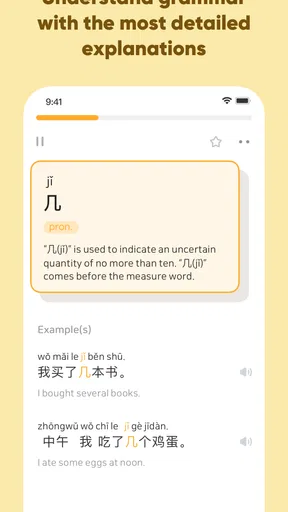

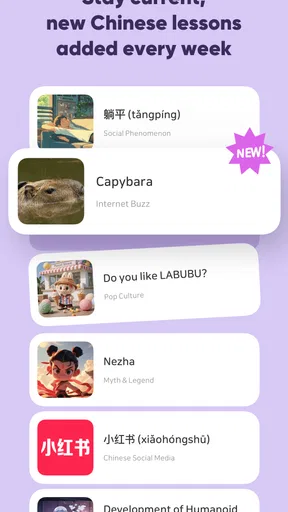
 Analysis by AppCompare
I like the idea of learning Mandarin in small, regular sessions more than trying to cram a textbook chapter into one evening. SuperChinese: Learn Chinese is built around that kind of routine, with guided lessons and speaking practice rather than a pile of vocabulary cards alone. I’d consider it most useful for someone who wants a structured starting point and can make a little time for practice most days, not for someone expecting a shortcut to fluent conversation.
What the cost does—and doesn’t—tell you
The app is free to download, while optional in-app purchases range from $0.99 to $189.99 per item. That makes it possible to try the learning experience before deciding whether paying makes sense for you. I would treat the free access as a chance to test the teaching style and your own study habits, rather than assume every lesson or feature is included at no cost.
The broad price range also means I’d check the details of any purchase in the app before confirming it. A low entry price and a much higher possible item price are not interchangeable, and the right value depends on what is included in the specific option you are considering. If you only want a quick look at the interface, start free; if you plan to study consistently, judge a paid option by whether it supports that routine over time.
Getting to Know SuperChinese
The first thing that caught my attention was the app's user-friendly interface. You know how some apps just feel clunky and outdated? Not this one. It’s sleek, modern, and pretty intuitive. From the moment you open it up, you’re greeted with a layout that makes navigation a breeze. Everything is neatly organized into categories, making it super easy to find exactly what you need.
One of the standout features is the use of AI to personalize your learning experience. It’s as if the app learns with you, adapting to your pace and style. You get personalized feedback that helps you improve, which is pretty cool, right?
Diving into the Features
Let’s talk about the lessons. They’re bite-sized and designed to fit into your daily routine. You can literally learn on the go, whether you’re on your commute or taking a quick break. The lessons cover everything from basic vocabulary to complex sentence structures.
One feature I particularly enjoyed is the speech recognition. It’s not just about reading and writing; you actually get to practice speaking. The app listens to your pronunciation and gives you feedback. It’s like having a personal tutor in your pocket!
Worth Reading Before You Choose

EA SPORTS FC Mobile 26 Is a Bigger Football Game, but It Takes Time

Flipboard Shows What News Apps Must Do Beyond the Feed

Switching to Android Auto Means Rethinking Your Driving Routine

Google Calendar Makes a Crowded Week Easier to Manage

Ludo King Makes the Most of the Minutes Between Plans

Baby Panda World Brings Quick Play to Modern Phones, but Its Game Library Feels Busy
Another thing that’s worth mentioning is the gamification aspect. The app turns learning into a game, which keeps things interesting and engaging. You earn points, unlock levels, and even compete with friends. It’s a fun way to stay motivated.
Making short lessons add up
Short sessions are helpful only if they lead to deliberate practice. I’d use a lesson as a starting point, then spend a minute saying its new phrases aloud without looking at the screen. That small pause makes it easier to notice whether I can retrieve the words myself, rather than merely recognize them while they are displayed. If pronunciation feedback flags a sound as weak, repeating the whole phrase slowly and then at a natural pace is more useful than rushing through another lesson.
A realistic routine might be to complete one short lesson during a quiet part of a commute, then revisit the same material later at home and speak the examples from memory. On a noisy bus, I would focus on listening and vocabulary rather than rely on voice feedback; in a calm room, I’d make speaking practice the priority. This keeps the app useful in different parts of the day without pretending every setting is equally good for pronunciation work.
There is a trade-off in the bite-sized format: it lowers the barrier to starting, but it can also make progress feel more complete than it is. Recognizing a sentence in a guided exercise is not the same as forming one in a real conversation. I’d pair lessons with a simple personal note of phrases I can produce without prompts, and return to those phrases a day or two later. That gives me a more honest sense of what has stuck.
Why SuperChinese Stands Out
Now, you might be wondering what makes SuperChinese: Learn Chinese different from other language apps. For me, it’s the combination of technology and teaching methodology. The app uses AI in a way that feels seamless and supportive. It’s not just about rote learning; it’s about understanding the language in context.
The app also includes cultural notes and tips, which I found incredibly useful. It’s one thing to learn a language, but understanding the culture behind it? That’s a whole new ball game. These insights make the learning experience richer and more immersive.
How it compares with other ways to study
Compared with a flashcard-only approach, this app is a better fit when I want a guided path that brings together lesson material and speaking practice. Flashcards can be excellent for reviewing characters or vocabulary I have already met, but they rarely give the same feeling of working through a connected lesson. On the other hand, a well-organized deck can be quicker when I have only a few minutes and want to drill a particular set of words.
A textbook or tutor can be a stronger choice when I need a detailed explanation, a teacher to correct a recurring mistake, or a conversation that responds naturally to what I say. SuperChinese’s feedback can make independent practice less solitary, but I would not treat automated pronunciation guidance as a complete replacement for a human listener. The two approaches can work together: use the app to build a regular base, then bring questions and speaking challenges to a teacher or conversation partner.
I’d also separate “learning Mandarin” from “being ready for every real-world situation.” A lesson-based app can help establish habits and useful foundations, while listening to varied speakers and handling unscripted exchanges take broader exposure. If your immediate goal is to prepare for a specific conversation, such as a work meeting or travel interaction, focus your practice on the vocabulary and situations you will actually encounter instead of assuming a general course alone covers everything.
Who is likely to get the most value
I’d recommend trying it if you are new to Mandarin, returning after a break, or looking for a structured way to practice without planning every session yourself. It may also suit a learner who feels awkward speaking aloud with another person at first; practicing privately can make the first attempts less intimidating. The combination of short lessons and pronunciation work gives that learner a clear next step instead of leaving them to decide what to study each day.
It is less likely to be the right main tool for someone who already speaks comfortably and wants advanced conversation, specialist vocabulary, or detailed instruction in a narrow area. In that case, direct conversation, targeted reading, or a tutor may be more efficient. It may also frustrate a person who wants a completely free course with no possibility of paid purchases, or someone who dislikes app-based prompts and points. The best choice depends on whether the guided format helps you show up consistently.
For younger learners, the content rating is Everyone, but I would still choose study material based on the learner’s reading ability and attention span rather than age label alone. The developer is Shanghai Yuxuan Information Technology Co., Ltd. The app has a 4.9 average from around 93,000 ratings, and it has been installed over 5 million times. Those figures suggest broad interest, but they cannot tell you whether its lesson style will suit your own learning preferences.
The Learning Curve
So, is it all sunshine and rainbows? Well, not entirely. Like any language learning journey, there’s a learning curve. Some users might find the initial stages a bit challenging, especially if they’re starting from scratch. But hey, that’s part of the fun, right?
The app does a great job of easing you into the complexities of the language. It encourages you to push through the tough bits without feeling overwhelmed. Remember, patience is key here. Stick with it, and you’ll see progress in no time.
Small choices that make practice more useful
One practical way to avoid passive tapping is to decide what you want from a session before opening the app: learn a handful of new expressions, revisit a difficult sound, or work through a lesson without help. That simple intention makes it easier to notice whether a session actually served its purpose. If I am tired or distracted, a short review is a more sensible choice than starting unfamiliar material and then forgetting most of it.
I would also avoid treating points, levels, or competition as proof of language ability. They can make repetition feel more inviting, which is valuable when motivation dips, but the meaningful test is whether I can understand and say something later without the game-like cues. A useful compromise is to enjoy the progress mechanics while setting a separate goal tied to language, such as recalling a phrase or pronouncing a sentence clearly.
Another trade-off is that personalized feedback can guide attention but may not explain every reason behind a correction. When a pronunciation attempt does not sound right, repeat it carefully and compare the result, but do not let one score define your ability. If the same issue keeps appearing, use an external explanation or ask a qualified speaker. That is a better response than endlessly repeating a sound without understanding what you are trying to change.
Practical details before you begin
The app is free, is rated for Everyone, and its current version is 6.2.3, with Android support beginning at version 8.0. It was released on June 5, 2019, and has 722 written reviews alongside its much larger rating count. I would check that your device meets the operating-system requirement before installing, then spend enough time with the free experience to see whether lessons, speaking exercises, and the overall pace feel comfortable.
If you are deciding whether to pay, first identify what you want the purchase to solve. Is it access to learning material you expect to use regularly, or are you buying in the hope that payment alone will create a study habit? The second is a poor reason to spend. I’d establish a realistic routine while using the free option, then compare the exact in-app purchase against how often I actually study. Since individual purchases vary widely in price, there is no single paid-value judgment that fits every learner.
For a learner who wants a daily prompt, guided Mandarin practice, and a low-pressure way to speak aloud, the free starting point is a sensible experiment. For someone who needs a human teacher, an entirely offline book-based plan, or a focused course for a specific professional goal, I’d look at those options first or use them alongside the app rather than expect one tool to meet every need.
Final Thoughts
All in all, SuperChinese: Learn Chinese is a fantastic tool for anyone serious about learning Mandarin. Whether you’re a complete newbie or looking to refine your skills, this app covers all bases. It’s engaging, effective, and most importantly, it makes learning fun.
If you’re keen to embark on this linguistic adventure, I’d say give it a go. You might just find yourself falling in love with the language and the culture. And who knows? You could be chatting away in Chinese before you know it!
My own verdict is to try it free first and let your actual habits decide the next step. If the lessons make it easier to return to Mandarin and you use the speaking practice with care, the app can earn a place in your routine. If you find yourself clicking through for points without remembering much, change the way you practice or choose a more suitable method before paying. That is a more reliable measure of value than the promise of fast progress.
Pros
- User-friendly interface for easy navigation.
- Variety of interactive learning modules.
- Daily challenges to boost motivation.
- Offline mode available for learning anywhere.
- Speech recognition for pronunciation practice.
Cons
- Limited free content; subscription needed.
- Occasional app crashes reported by users.
- Requires internet for some features.
- Ads can be disruptive in free version.
- Some lessons lack sufficient depth.
FAQs for SuperChinese: Learn Chinese
What is SuperChinese: Learn Chinese?
SuperChinese is an educational app designed to help users learn Mandarin Chinese through interactive lessons, engaging exercises, and AI-powered features. The app uses speech recognition and personalized learning plans to cater to different skill levels, making it suitable for beginners and advanced learners alike.
How effective is the AI-powered learning in SuperChinese?
The AI-powered learning in SuperChinese is highly effective as it adapts to each user's learning pace and style. The app uses AI to analyze your progress, identify areas for improvement, and adjust the lessons accordingly. This ensures a personalized learning experience that maximizes retention and fluency.
What features does SuperChinese offer to enhance learning?
SuperChinese offers a variety of features, including interactive lessons, speech recognition for pronunciation practice, and flashcards for vocabulary building. The app also includes cultural insights and real-life conversation scenarios to provide a well-rounded understanding of the Chinese language and culture.
Is SuperChinese suitable for beginners?
Yes, SuperChinese is ideal for beginners. The app starts with fundamental lessons on basic vocabulary and sentence structures. The user-friendly interface and gradual progression make it easy for novices to start learning without feeling overwhelmed. Additionally, the app provides constant feedback to facilitate improvement.
Are there any in-app purchases or subscription fees in SuperChinese?
SuperChinese offers a free version with limited access to lessons and features. To unlock the full range of content and advanced features, users can opt for a subscription plan. These plans are available on a monthly or yearly basis, providing flexibility depending on your learning goals and budget.


